Helping Kids Navigate Big Holiday Feelings
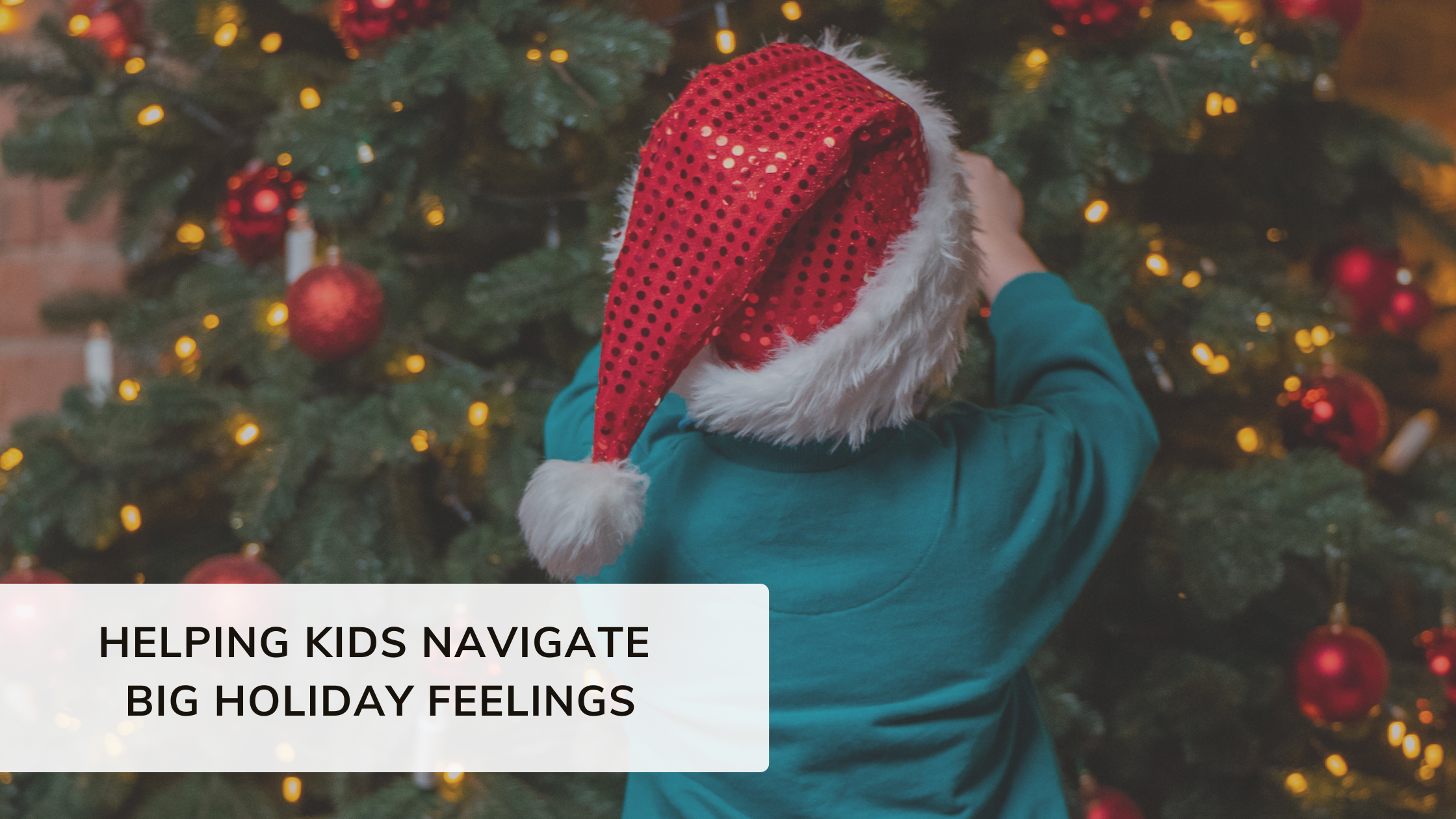
The Christmas holidays can be magical…but they can also bring a lot of big feelings for the little ones in our lives. Often, this ends up taking a toll on kids’ mental and emotional wellbeing. It’s easy for these feelings of excitement, eagerness, or anxiousness to feel overwhelming. Here are a few ways the season affects them:
1) Big feelings get bigger
With holidays we have changes in routine, more people, and more expectations. This can cause our kids to become more sensitive, or dysregulated and that’s completely normal.
2) They may feel more pressure
Our expectations for them to be good, grateful, smile for photos, or even participate in holiday activities, can be a lot of pressure. Even small comments like “come on, it’s Christmas!” can make them feel like their natural feelings aren’t allowed.
3) More stimulation = more quickly overwhelmed
From lights, sugar, noise, travel, late nights - it all adds up. A nervous system, which is usually calm, is now on high alert. This often results in meltdowns, frustration, and deeper fatigue.
4) Changes in connection
Our kids depend on one-on-one time to help them feel grounded - holiday gatherings can mean less of this. Even if they’re having fun, they can feel “off” when their emotional anchor feels farther away.
5) Heightened expectations
They feel our stress, excitement, even our busier schedules. Kids often try to meet us at what we we want the holidays to look like, even if they don’t fully understand it.
So, how can we help our precious little souls with these big emotions?
1) Keep small anchors of routine
Even during the holiday chaos, we can hold on to a few predictable things to help them feel safer. This could be their bedtime routine, morning snuggles, or a quiet moment after lunch. Remind them how much you love them - this will help them feel safer.
2) Name the feelings for them
Holiday overwhelm can be confusing for kids. Try:
“Wow, there’s a lot happening today. It makes sense if you’re feeling a little wiggly inside.” When we validate and name their feeling, it helps their nervous system settle.
3) Offer them gentle connection before correction
Before asking them to behave differently, offer closeness: a hug, hand squeeze, or just sitting with them. A regulated parent help’s a child’s body calm down faster than any words.
4) Create mini calm breaks
Have a quiet space or short ritual they can return to:
- A breathing buddy
- A soft blanker
- A “calm corner” in their bedroom
- A moment outside in the fresh air
Tiny pauses help reset their overwhelmed system
5) Lower the expectations, for everyone
Let go of the idea that every moment must be magical. I find that during this time of year, many parents are too hard themselves. Give yourself some grace. Kids don’t need perfect; they need presence. When we slow down, they feel permission to slow down too.
6) Model your own calm
Kids learn how to navigate holiday emotions by watching how we navigate ours. A simple, deep breath or a soft reset shows them they aren’t alone in the big feelings.
The holidays can bring big emotions, and our calm presence is the anchor our kids need most. When we slow down, offer connection, and make space for their feelings, we turn an overwhelming season into a safe one. It doesn’t need to be perfect - just gentle, warm, and grounded in love.
Until next time…Happy holidays