The Back-to-School Survival Guide: Helping Kids Through Worries, Fears & Anxiety
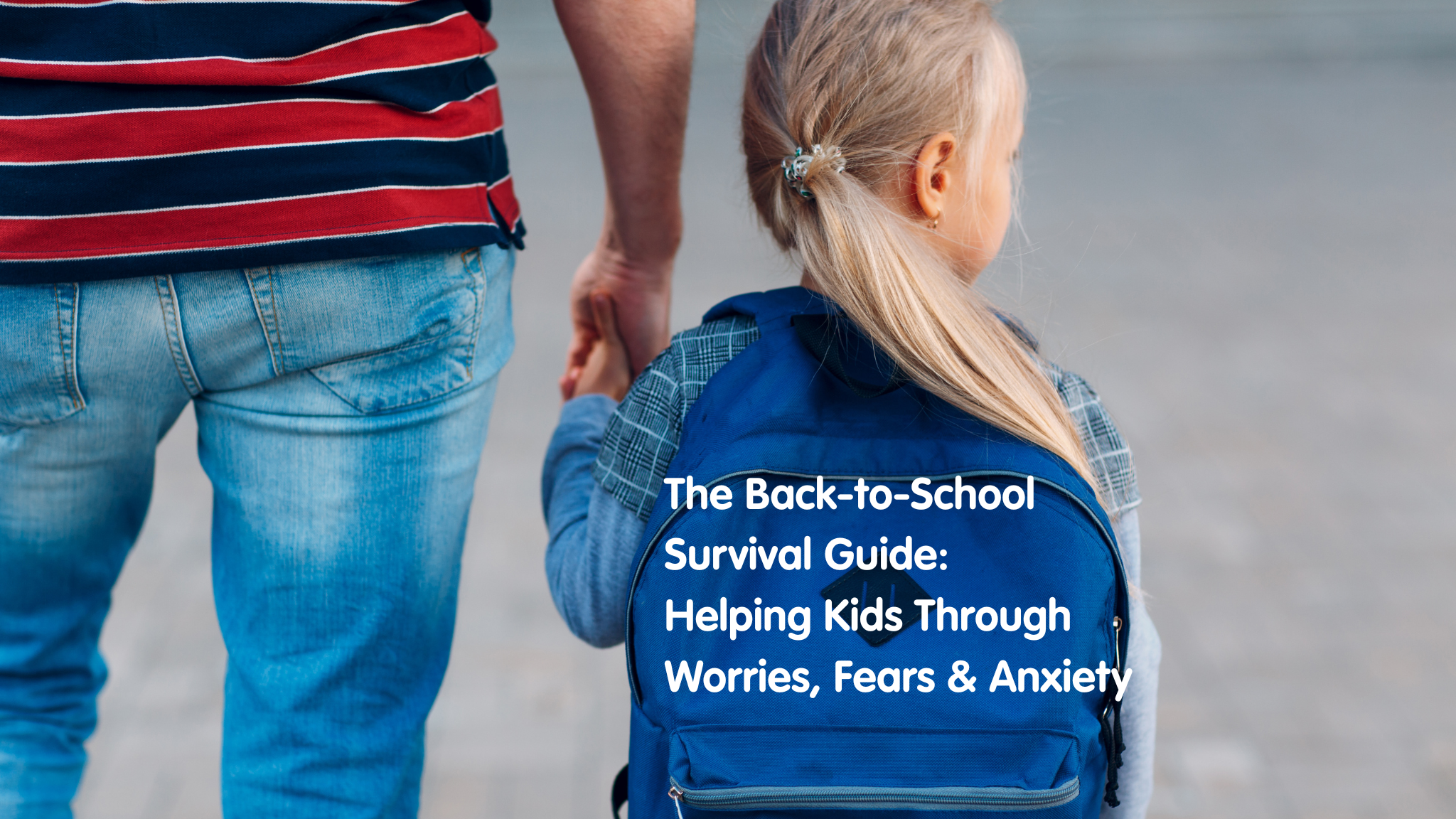
There’s something about back-to-school season that brings two very different emotions into the same house.
Excitement.
And worry.
A child can be excited to see their friends and still be afraid they won’t know where to go.
They can love their new backpack and still have a stomach-ache the night before school.
They can tell you, “I’m fine,” while quietly wondering:
What if I don’t know anyone?
What if my teacher is mean?
What if I can’t do the work?
What if nobody plays with me?
What if I miss you?
Those “what ifs” are killers!
Back-to-school anxiety doesn’t always look like a child saying, I’m anxious.”
Sometimes it looks like irritability, tears over little things, trouble sleeping, stomach-aches, headaches, clinginess, refusing to talk about school, or suddenly needing more reassurance than usual.
So as families head back into routines, schedules, lunches and early mornings, here’s my Back-to School Survival Guide – not just for getting kids out the door, but for helping them feel emotionally ready too.
1) Don’t Rush to Talk Them Out of the Worry
When our child says:
“I’m scared.”
Our instinct is often to respond:
“You don’t need to be scared!”
We mean well. We want them to feel better.
But instead of immediately trying to remove the fear, try meeting them in it.
“I can understand why that feels scary. What part are you most worried about?”
That small shift sends an important message:
You can tell me the hard stuff. I can handle hearing it.
And sometimes being heard is exactly what a worried child needs first.
2) Turn the Big Worry into a Smaller One
“School is scary” feels enormous.
But what does school actually mean to your child?
Is it walking into the classroom?
Finding someone to sit with?
Being away from you?
Getting on the bus?
Not knowing the teacher?
Making a mistake?
Try asking:
“What part feels the hardest right now?”
Once you know the actual worry, you can help your child think about what might make that one part feel a little easier.
We don’t have to solve the entire school year.
Sometimes we just need to help them through the next step.
3) Give Them a Plan for the “What Ifs”
Anxious brains love what if.
What if I don’t know where to go?
What if I miss you?
What if nobody plays with me?
Instead of promising those things won’t happen, help your child build a plan.
“If that happens, what could you do?”
Maybe they can ask a teacher for help, look for a familiar face, take 3 slow breaths, remember something you said that morning.
The goal isn’t to convince kids that nothing uncomfortable will happen. It’s to help them begin believing:
“Even if something feels hard, I can handle it.”
That is where confidence grows.
4) Create a Simple Goodbye Ritual
For a child struggling with separation, long emotional goodbyes can sometimes make leaving even harder.
Instead, create something predictable. Maybe it’s:
One hug. One deep breath. One phrase.
Use the same ritual each morning.
Predictability can feel incredibly comforting when everything else feels new.
5) Teach Them Something They Can Do When You Aren’t There
This is one of the reasons I care so much about giving kids simple emotional wellness tools.
We won’t always be beside them when the worry shows up.
But we can give them something they can carry with them.
Try this:
Bubble Breathing
Ask your child to imagine they are blowing a giant bubble.
Slowly breathe in through the nose.
Then gently breathe out as though they’re blowing the biggest, slowest bubble they can.
Repeat a few times. You can even say:
“You can use your bubble breath anytime your body starts feeling worries – even when I’m not there.”
That last part matters.
We are helping kids discover that they have tools inside themselves.
A Reminder for the Grown-Ups
Back-to school can bring up emotions for us too.
We worry about whether our children will make friends.
Whether they’ll keep up.
Whether their teacher will understand them.
Whether they’ll be okay without us.
But our job isn’t to remove every uncomfortable feeling from their path. Our job is to help them learn:
I can feel nervous and still go.
I can feel unsure and still try.
I can miss home and still have a good day.
I can be scared and still be brave.
Bravery and fear can exist at the same time. Sometimes courage really does look like:
Doing it scared.
This Week’s Family Challenge
Before school starts, sit down together and ask everyone – adults included:
“What is one thing you’re worried about right now, and what could help you feel a little more ready?”
Don’t rush to fix the answers.
Listen.
Talk about them.
Then choose one small thing each person can do.
Because emotional readiness isn’t about eliminating every worry before the first bell rings.
It’s about helping our kids know:
Whatever comes, we can figure it out together.
And sometimes, that is exactly what they need to walk through those school doors.
Until next time…
Wendy Demer
Author of Empowering our Future and Lumi’s Magical Bubble